Nesting bowls and measuring cups are one of the smartest purchases for small apartment kitchens. Instead of separate bowls, cups, and containers taking up an entire cabinet, everything stacks into one compact footprint.
If you need nesting bowls and measuring cups, this guide covers everything: what to look for, best materials, and which sets are worth buying. A good nesting bowls and measuring cups set replaces 8 to 12 individual items, saving significant cabinet space.
Contents
What Is a Nesting Bowl Set?
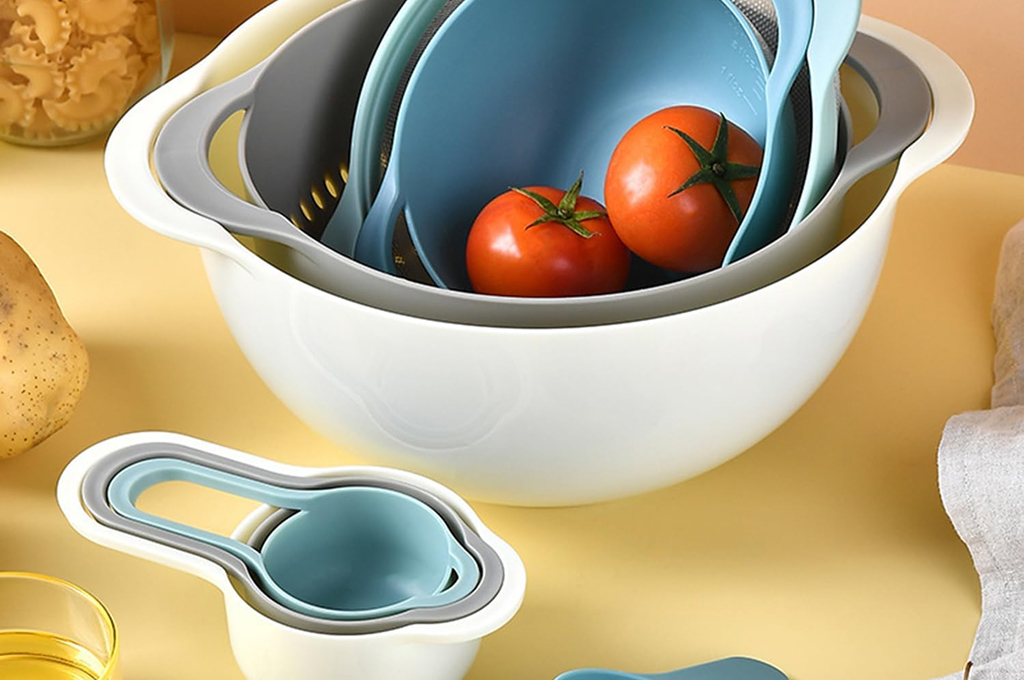
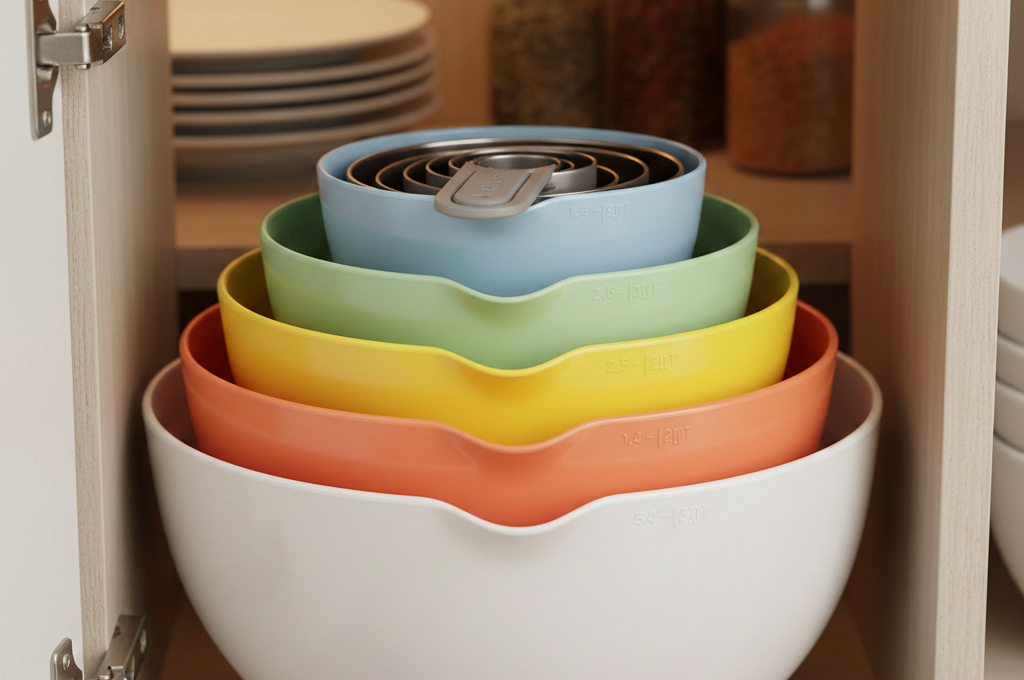
A nesting bowl set includes multiple bowls and measuring tools designed to fit inside each other. The largest bowl holds all smaller pieces. When stacked, the entire set occupies the space of one bowl.
Most nesting bowls and measuring cups sets include:
- 2-4 mixing bowls in graduated sizes
- Measuring cups (1 cup, 1/2 cup, 1/3 cup, 1/4 cup)
- Sometimes measuring spoons
- Some sets add a colander or sifter
The best nesting bowls and measuring cups sets are designed with precise sizing so pieces stack securely without shifting or rattling. According to Good Housekeeping’s kitchen organization guide, stackable items can reduce cabinet clutter by up to 50%.
Who Needs Nesting Bowls and Measuring Cups?
This set is ideal for:
- Anyone setting up a first apartment kitchen
- Renters with limited cabinet space
- Minimalists who want fewer but more functional items
- Bakers who need multiple bowl sizes for recipes
- People replacing mismatched bowls accumulated over years
If you have full-sized cabinets and plenty of storage, a nesting set is nice but not essential. For small kitchens, it’s close to mandatory.
How Much Space Do You Actually Save?
Here’s a comparison:
Without nesting set:
- 3 mixing bowls: ~12 inches of shelf space
- 4 measuring cups: ~6 inches (if hung) or scattered in drawer
- Colander: ~8 inches
- Total: 26+ inches of cabinet/drawer space
With nesting set:
- Complete set stacked: ~6 inches of shelf space
- Total: 6 inches
That’s roughly 75% space savings. In a small apartment kitchen, this difference is substantial.
Pros
- Massive space savings in cabinets
- One organized stack replaces 8-12 separate items
- Multiple functions covered by single purchase
- Easy to keep organized since everything has a place
- Most sets are dishwasher safe
- Available in various materials and price points
- Clear measurement markings on quality sets
Cons
- Plastic versions can stain from tomato sauce or turmeric
- If one piece cracks, nesting may not work properly
- Some sets have awkward intermediate sizes
- Cheaper sets have flimsy construction
- Must unstack to access smaller pieces
- Not all sets include every size you might need
Materials: Plastic vs Stainless Steel vs Glass
Plastic
- Lightest weight
- Most affordable ($15-30)
- Can stain and scratch
- Usually includes most pieces
- Best for: Budget-conscious buyers, light use
Stainless Steel
- Most durable
- Mid-range price ($25-50)
- Won’t stain or absorb odors
- Heavier than plastic
- Best for: Serious home cooks, long-term use
Glass
- Heaviest
- Higher price ($30-60)
- Can see contents while mixing
- Breakable if dropped
- Best for: Microwave use, display aesthetics
For most small apartment kitchens, plastic or stainless steel offers the best balance of function, durability, and price.
What to Look For When Buying
Secure stacking: Pieces should nest firmly without wobbling. Loose fits mean pieces shift and take more space.
Useful sizes: Make sure the set includes sizes you’ll actually use. Common mixing bowl sizes are 1.5, 3, and 5 quarts. For measuring cups, you need at minimum 1 cup, 1/2 cup, 1/3 cup, and 1/4 cup.
Clear markings: Measurement markings should be easy to read and durable. Printed markings can wear off. Molded or etched markings last longer.
Non-slip base: Bowls with rubberized bottoms stay put during mixing. Essential for small counters where bowls might slide off the edge.
Pour spouts: Some mixing bowls include pour spouts for transferring batters. Nice feature but not essential.
Lids: Some sets include lids for storage. Useful if you use bowls for food storage, but adds bulk when stacked.
How to Care for Nesting Bowls
Plastic sets:
- Top rack dishwasher safe
- Avoid high heat which can warp pieces
- Hand wash if measurements are printed (not molded)
- Dry completely before stacking to prevent moisture trapped between pieces
Stainless steel sets:
- Dishwasher safe
- Dry immediately to prevent water spots
- Can use for double boiler cooking
Glass sets:
- Dishwasher safe but hand washing preserves clarity
- Avoid extreme temperature changes (hot bowl + cold water = cracking)
- Store with soft material between pieces to prevent chips
Our Verdict
A nesting bowls and measuring cups set is the single best purchase for someone setting up a small apartment kitchen. The space savings justify the cost, and quality nesting bowls and measuring cups last for years.
Buy once, store everything in one stack, never dig through cabinets looking for the right measuring cup again. For more small kitchen organization tips, see The Kitchn’s guide to maximizing cabinet space.
Spend slightly more for a stainless steel nesting bowls and measuring cups set if you plan to use it long-term. Plastic works fine for lighter use or tight budgets.
Frequently Asked Questions
Can I buy individual replacement pieces? Usually no. Nesting sets are designed as complete systems. If a piece breaks, you typically need to buy a new set. This is why investing in quality matters.
Are nesting bowls good for baking? Yes. Most sets include sizes perfect for mixing dry ingredients, wet ingredients, and combining batters. Just make sure your set includes at least a 3-quart and 5-quart bowl for standard recipes.
Do nesting bowls work with stand mixers? Some do, some don’t. Check the bowl diameter against your mixer’s splash guard. Standard stand mixer bowls are 5-6 quarts.
What’s the best brand? For plastic, COOK WITH COLOR offers good quality at reasonable prices. For stainless steel, look at Cuisinart or Priority Chef sets. Avoid no-name brands with suspiciously low prices.