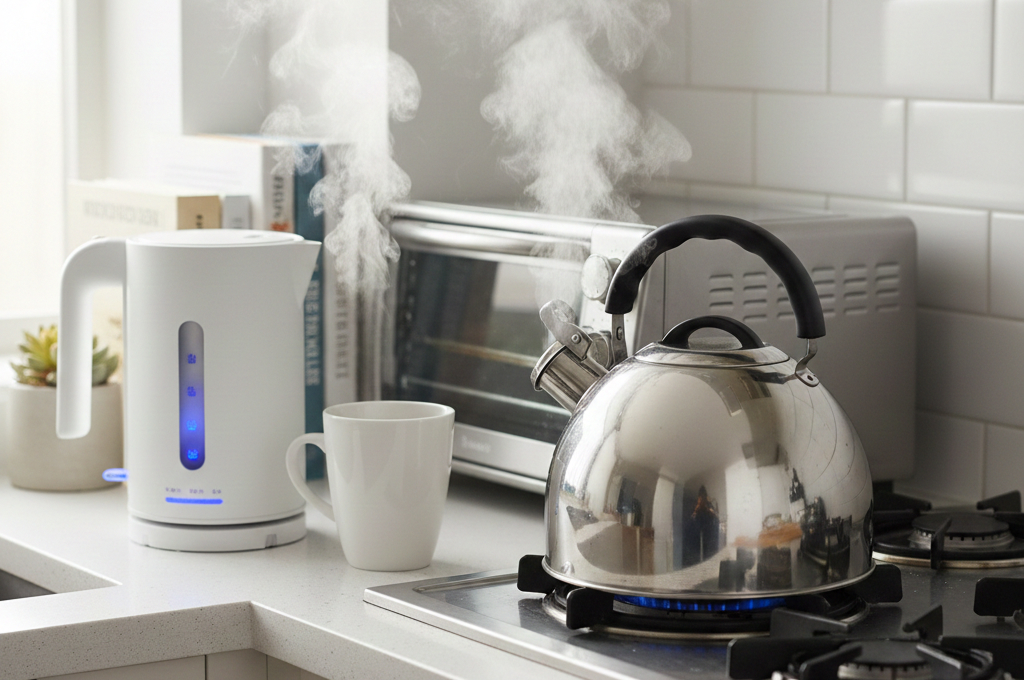
Electric kettle vs stovetop kettle is a practical question for small apartments. Both boil water, but they work differently and suit different kitchen setups.
This comparison covers electric kettle vs stovetop kettle across speed, safety, space, energy use, and cost. By the end, you’ll know which fits your apartment kitchen.
Contents
Quick Answer
Get an electric kettle if: You boil water frequently, value speed, or have limited stovetop space.
Get a stovetop kettle if: You rarely boil water, want to save counter space, or prefer the aesthetic.
Speed Comparison
The biggest difference in electric kettle vs stovetop kettle is boiling time.
| Method | Time to Boil 1 Liter |
|---|---|
| Electric kettle | 3-4 minutes |
| Stovetop (gas) | 6-8 minutes |
| Stovetop (electric coil) | 8-10 minutes |
| Stovetop (induction) | 4-5 minutes |
Electric kettles are consistently faster because all energy goes directly into the water. Stovetops lose heat to the surrounding air.
According to Consumer Reports, electric kettles boil water 50% faster than gas stoves on average.
Winner: Electric kettle
Energy Efficiency
Electric kettles are more energy-efficient per boil.
| Method | Energy Per Liter |
|---|---|
| Electric kettle | 0.1 kWh |
| Gas stovetop | 0.15-0.2 kWh equivalent |
| Electric stovetop | 0.15-0.25 kWh |
Electric kettles heat only the water. Stovetops heat the pot, burner grate, surrounding air, and then the water.
Winner: Electric kettle
Space Requirements
Space is where electric kettle vs stovetop kettle gets interesting for apartments.
Electric Kettle:
- Counter footprint: 6″ x 8″ (typical)
- Height: 9-11″
- Requires outlet access
- Takes permanent counter space (usually)
Stovetop Kettle:
- Stored on stove or in cabinet
- No counter space when stored
- No outlet needed
- Uses burner (occupies cooking space when in use)
If your counters are full but you have cabinet space, stovetop wins. If you have a small outlet corner but cook constantly, electric wins.
Winner: Depends on your layout
Safety
Both have safety considerations in apartments.
Electric Kettle Safety:
- Auto shut-off when boiling (standard feature)
- Boil-dry protection (most models)
- No open flame
- Cord can be tripping hazard
Stovetop Kettle Safety:
- Whistles when boiling (if whistling type)
- No auto shut-off
- Open flame risk (gas)
- Handle can get hot
For forgetful users or households with children, electric kettles are safer due to auto shut-off.
Winner: Electric kettle
Noise Levels
In apartments with thin walls, noise matters.
Electric Kettle: Quiet humming during heating. Brief bubbling at boil. No whistle unless you buy one with that feature.
Stovetop Kettle: Whistling kettles are loud (70-80 dB). Non-whistling versions are silent but require monitoring.
Winner: Electric kettle (quieter) or non-whistling stovetop (silent)
Cost Analysis
Upfront Cost
| Type | Price Range |
|---|---|
| Basic electric kettle | $15-30 |
| Quality electric kettle | $30-60 |
| Premium electric kettle | $60-150 |
| Stovetop kettle (stainless) | $20-40 |
| Stovetop kettle (enamel) | $30-80 |
Operating Cost (Per Year, Daily Use)
| Method | Annual Energy Cost |
|---|---|
| Electric kettle | $8-12 |
| Gas stovetop | $10-15 |
| Electric stovetop | $15-25 |
Electric kettles cost slightly less to operate than stovetops over time.
Winner: Electric kettle (operating cost), Tie (upfront cost)
Features Comparison
Electric Kettle Features:
- Auto shut-off (standard)
- Temperature settings (mid-range+)
- Keep warm function (some models)
- Cordless pouring (most models)
- Water level indicator
Stovetop Kettle Features:
- Whistle alert (most models)
- No electronics to fail
- Works during power outages
- Traditional aesthetic
- Lasts decades with care
Electric kettles offer more features. Stovetop kettles offer simplicity and longevity.
Durability
Electric Kettle Lifespan: 3-7 years depending on quality and usage. Heating elements eventually fail.
Stovetop Kettle Lifespan: 10-30+ years. Stainless steel models can last a lifetime with proper care.
Winner: Stovetop kettle
Best Use Cases
Choose Electric Kettle If You:
- Make tea, pour-over coffee, or instant oatmeal daily
- Want water boiled in under 4 minutes
- Have limited stovetop burners
- Value auto shut-off safety
- Need precise temperature for tea types
Choose Stovetop Kettle If You:
- Boil water occasionally (few times per week)
- Have no free counter space but have cabinet room
- Want something that lasts decades
- Prefer traditional kitchen aesthetic
- Need to boil water during power outages
Best Options for Apartments
Best Electric Kettles:
Budget: Hamilton Beach 1 Liter ($15-25) Check Price on Amazon
Mid-range: Cuisinart CPK-17 ($80-100, temperature control) Check Price on Amazon
Compact: Bonavita Mini 0.5 Liter ($40-50, smallest size) Check Price on Amazon
Check Electric Kettles on Amazon
Best Stovetop Kettles:
Budget: Mr. Coffee Flintshire ($15-25, stainless) Check Price on Amazon
Design: Le Creuset Classic ($80-120, enamel)
Compact: OXO Brew 1.7 Qt ($50-70, pour control) Check Price on Amazon
Our Verdict
In the electric kettle vs stovetop kettle debate, electric wins for most apartment dwellers. The speed, safety features, and energy efficiency outweigh the counter space trade-off.
Stovetop makes sense if you have zero counter space, boil water rarely, or want a kettle that lasts forever.
For more apartment kitchen guidance, see CNET’s electric kettle reviews.
Related:
Compact Coffee Maker for Apartments