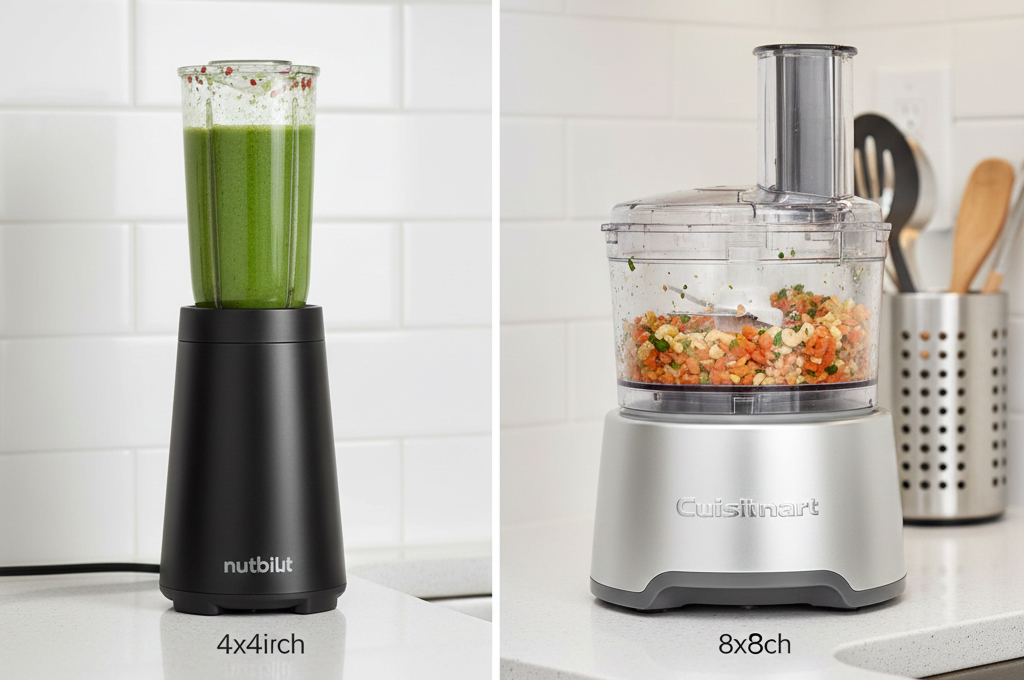
Compact blender vs food processor is a common dilemma in small apartment kitchens. Both chop, blend, and process food, but they work differently and excel at different tasks.
This comparison explains what each appliance does best, helping you decide whether a compact blender vs food processor makes more sense for your cooking style and limited space.
Contents
Quick Answer
Get a compact blender if: You make smoothies, soups, sauces, or drinks. Liquids are your primary need.
Get a food processor if: You chop vegetables, make dough, slice, shred, or prepare ingredients for cooking. Solid foods are your focus.
Get both if: You cook frequently and have space. They don’t overlap as much as you’d think.
What Each Appliance Does Best
Compact Blender Excels At:
- Smoothies and protein shakes
- Pureed soups
- Sauces and dressings
- Frozen drinks and margaritas
- Baby food
- Crushing ice
Food Processor Excels At:
- Chopping vegetables uniformly
- Slicing and shredding (with disc attachments)
- Making pie crust and bread dough
- Grinding meat
- Making nut butter (better than blender)
- Pesto and chunky salsas
Neither Does Well:
- Juicing (need a juicer)
- Grinding coffee (need a grinder)
- Whipping cream (use a mixer)
Size Comparison
In the compact blender vs food processor space debate:
| Appliance | Typical Footprint | Height | Storage |
|---|---|---|---|
| Compact blender | 6″ x 6″ | 14-16″ | Easier (narrower) |
| Mini food processor | 7″ x 9″ | 10-12″ | Harder (wider base) |
Compact blenders are taller but have smaller footprints. Food processors are shorter but wider. For tight counter space, blenders often fit better.
According to Consumer Reports, compact blenders have become significantly more powerful in recent years, handling tasks that once required full-size models.
Overlap: What Both Can Do
Some tasks work in either appliance:
| Task | Better In |
|---|---|
| Hummus | Food processor |
| Pesto | Food processor (chunky) or blender (smooth) |
| Salsa | Food processor |
| Soup (pureed) | Blender |
| Nut butter | Food processor |
| Chopped onions | Food processor |
| Smoothies | Blender |
| Crushed ice | Blender |
The key difference: blenders need liquid to work. Food processors handle dry ingredients.
Noise Levels
Both appliances are loud, but duration differs.
| Appliance | Noise Level | Typical Use Time |
|---|---|---|
| Compact blender | 80-90 dB | 30-60 seconds |
| Food processor | 75-85 dB | 10-30 seconds |
Food processors are slightly quieter and run for shorter bursts. For apartment living, this can matter.
Price Comparison
| Type | Budget | Mid-Range | Premium |
|---|---|---|---|
| Compact blender | $30-50 | $50-100 | $100-200 |
| Mini food processor | $25-40 | $40-80 | $80-150 |
Food processors are generally cheaper at equivalent quality levels. However, the compact blender vs food processor price gap has narrowed with personal blenders becoming mainstream.
Cleaning Comparison
Compact Blender:
- Add soap and water, blend, rinse
- Most parts dishwasher safe
- Narrow jar can be tricky to hand wash
- Fewer parts overall
Food Processor:
- Multiple blades and discs to clean
- Bowl is easy to wash
- More pieces to store
- Sharp blades require careful handling
Winner: Compact blender (easier cleaning)
Which to Buy First?
If you can only have one, consider your cooking habits:
Buy a compact blender first if you:
- Make smoothies or protein shakes regularly
- Eat pureed soups
- Make sauces, dressings, or marinades
- Don’t do much vegetable prep
- Prioritize easy cleanup
Buy a food processor first if you:
- Cook from scratch frequently
- Chop lots of vegetables
- Bake (pie crusts, bread dough)
- Make chunky dips and salsas
- Want uniform slicing and shredding
Combo Appliances: Are They Worth It?
Some appliances combine blender and food processor functions. In a compact blender vs food processor combo:
Pros:
- One appliance, one footprint
- Fewer items to store
- Often cheaper than buying both
Cons:
- Jack of all trades, master of none
- If it breaks, you lose both functions
- Switching attachments is annoying
For serious cooks, dedicated appliances perform better. For occasional users, combos can work.
Best Options for Small Apartments
Best Compact Blenders:
- Nutribullet (single-serve, compact)
- Ninja Personal Blender (powerful, affordable)
- Vitamix Personal Cup (premium, quiet)
Check Compact Blenders on Amazon
Best Mini Food Processors:
- Cuisinart Mini-Prep (3-cup, reliable)
- KitchenAid 3.5 Cup (quality, compact)
- Hamilton Beach Stack & Snap (budget-friendly)
Check Mini Food Processors on Amazon
Our Verdict
In the compact blender vs food processor debate, most small apartment dwellers should start with a compact blender. Smoothies, soups, and sauces are everyday items. Serious vegetable prep is less common for single or couple households.
If you cook from scratch regularly and chop lots of ingredients, the food processor delivers more value per use.
For more kitchen appliance guidance, see Good Housekeeping’s small appliance reviews.
Related: