Learning how to organize a small apartment kitchen spaces requires different strategies than standard advice. Most organization tips assume you have pantry space, deep cabinets, and permission to drill holes. Renters rarely have these options. This guide shows exactly how to organize small apartment kitchen layouts when you’re working with 4-6 cabinets, no pantry, and zero drilling allowed.
When you organize small apartment kitchen spaces without a pantry, you need creative solutions that renters can actually use.
Contents
The No-Pantry Reality
When you organize a small apartment kitchen without a pantry, you lose:
- 15-30 square feet of storage
- Dedicated food storage space
- Easy visibility of ingredients
- Bulk buying options
You gain the challenge of fitting everything into 4-6 cabinets and whatever counter space you can spare.
Step 1: Audit Everything
Before you organize a small apartment kitchen, know what you’re working with.
Remove everything from cabinets. Put it all on your bed or table. Yes, everything.
Sort into piles:
- Use weekly
- Use monthly
- Haven’t used in 3+ months
- Duplicates
- Expired
Be ruthless. If you haven’t used it in 3 months and it’s not seasonal, remove it. Donate, sell, or trash.
Most people find 20-30% of their kitchen items are unused. That’s your new storage space.
Step 2: Create Zones
To effectively organize a small apartment kitchen, create functional zones:
Cooking Zone (near stove):
- Oils, salt, pepper, daily spices
- Cooking utensils
- Pots and pans
- Splatter screen
Prep Zone (near counter space):
- Cutting boards
- Knives
- Mixing bowls
- Measuring tools
Cleaning Zone (near sink):
- Dish soap
- Sponges/scrubbers
- Drying rack/mat
- Trash bags
Storage Zone (wherever fits):
- Dry goods
- Canned goods
- Snacks
- Backup supplies
Keeping items in their use zone reduces steps and keeps your kitchen functional.
Step 3: Maximize Cabinet Space
Use Shelf Risers
Add a second level to every shelf. Plates on bottom, bowls on top. Doubles usable space.
Cost: $12-25 each
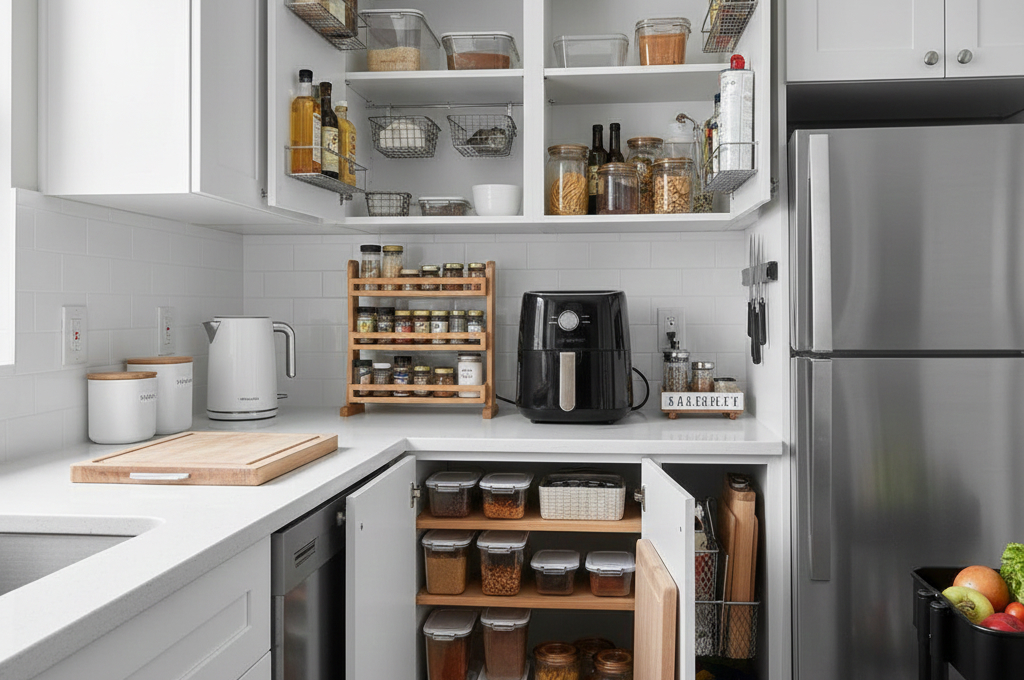
Add Under-Shelf Baskets
Clip onto existing shelves. Creates storage for flat items like lids, wraps, and cutting boards.
Cost: $10-20 for 2
Install Lazy Susans
Put in corner cabinets and deep shelves. Access items in the back without digging.
Cost: $15-35 each
Use Cabinet Door Backs
Mount over-door organizers for foil, wrap, spices, or cleaning supplies. Uses completely dead space.
Cost: $15-30 each
According to Good Housekeeping, these four upgrades can increase cabinet capacity by 40-60%.
These cabinet upgrades help you organize small apartment kitchen storage efficiently.
Step 4: Create a Faux Pantry
No pantry? Create one. Here’s how to organize a small apartment kitchen pantry substitute:
Option 1: Slim Rolling Cart
Fits in 6-8 inch gaps. Three tiers hold oils, canned goods, spices, paper towels.
Where: Between fridge and wall, beside stove, end of counter
Cost: $25-50
Option 2: Over-Door Rack (Bedroom Closet)
Mount a shoe organizer on bedroom closet door. Fill with lightweight pantry items.
What fits: Snacks, tea, spice packets, small canned goods
Cost: $15-25
Option 3: Under-Bed Storage
Flat bins under bed hold bulk dry goods, canned goods, paper products.
What fits: Rice, pasta, canned goods, paper towels, bulk items
Cost: $15-30 per bin
Option 4: Bookshelf Pantry
Small bookshelf in living area with baskets. Looks decorative, functions as pantry.
What fits: Anything in attractive containers
Cost: $30-80 for shelf + baskets
Creating a faux pantry is essential when you organize small apartment kitchen spaces with no dedicated food storage.
Step 5: Optimize Counter Space
When you organize a small apartment kitchen, counter space is premium real estate.
Clear the Counters
Remove everything except daily-use items. For most people that’s:
- Coffee maker OR kettle (not both)
- Knife block or utensil crock
- Salt and pepper
Everything else goes in cabinets or storage.
Use Vertical Space
Install adhesive hooks for mugs or utensils. Mount magnetic knife strip. Add a wall-mounted spice rack.
None require drilling.
Over-Sink Cutting Board
Creates prep space that doesn’t exist. Stores flat when not in use.
Check Over-Sink Cutting Boards
Step 6: Contain Everything
When you organize a small apartment kitchen, containers prevent chaos:
Dry goods: Clear containers show contents and stack better than original packaging
Spices: Magnetic jars on fridge or uniform jars in drawer
Utensils: One crock for cooking tools, one divided tray for drawer
Under sink: Bins or baskets to corral cleaning supplies
Refrigerator: Clear bins for categories (dairy, produce, leftovers)
Containers make small spaces feel larger because you can see what you have.
Containers are essential when you organize small apartment kitchen cabinets and drawers.
Step 7: Maintain the System
To keep your small apartment kitchen organized:
One in, one out. New item means old item leaves.
Weekly reset. 10 minutes to put everything back in place.
Monthly audit. Check for expired items, unused tools, accumulated clutter.
Seasonal rotation. Holiday items stored away. Summer/winter tools swapped.
Organization isn’t a one-time event. It’s an ongoing habit.
To keep your small apartment kitchen organized long-term, build these habits.
What to Buy to Organize a Small Apartment Kitchen
Here’s what to buy when you organize small apartment kitchen spaces on a budget.
| Solution | Cost | Impact |
|---|---|---|
| Shelf risers (2) | $25-50 | High |
| Under-shelf baskets (2) | $20-40 | High |
| Lazy susan | $15-35 | Medium |
| Over-door organizer | $15-30 | High |
| Slim rolling cart | $25-50 | High |
| Clear containers set | $20-40 | Medium |
| Total | $120-245 |
Start with shelf risers and under-shelf baskets. Highest impact per dollar.
For more organization strategies, see The Spruce’s rental kitchen guide.
Related: