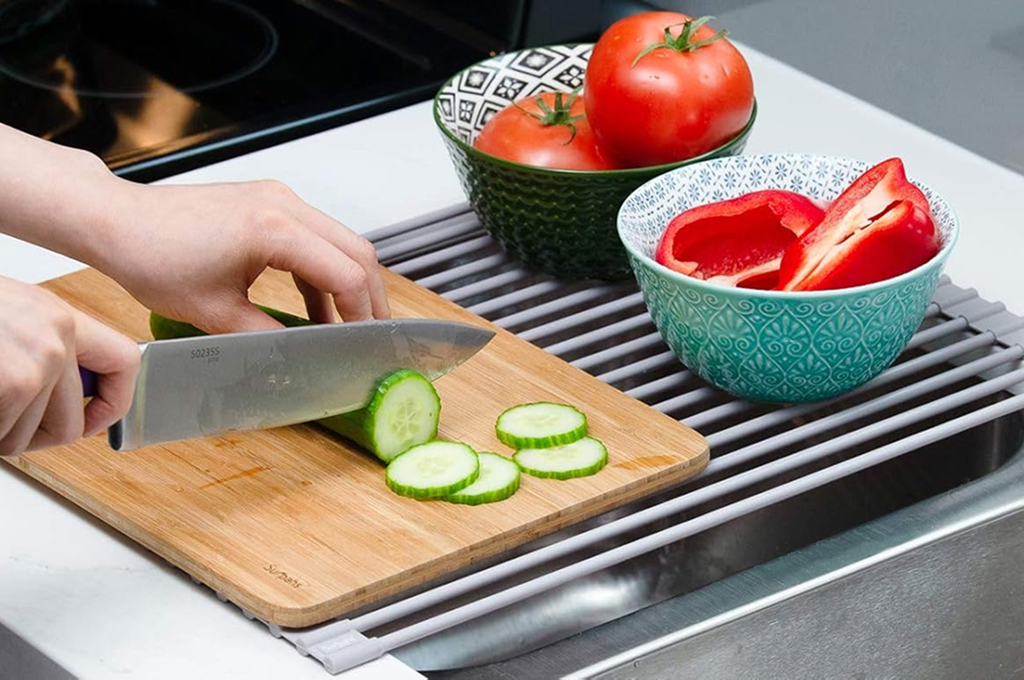
Over the sink cutting board is one of the highest-impact purchases for a small apartment kitchen. If you have no counter space for food prep, an over the sink cutting board creates a work surface where none existed.
This guide covers everything you need to know about choosing an over the sink cutting board: how they work, what sizes fit which sinks, and whether the colander feature is worth it. If you’re considering an over the sink cutting board, read this before buying.
Contents
- 1 What Is an Over the Sink Cutting Board?
- 2 How an Over the Sink Cutting Board Works
- 3 Pros
- 4 Cons
- 5 Who Should Buy an Over the Sink Cutting Board
- 6 Who Should Skip This
- 7 What to Look For When Buying
- 8 How to Measure Your Sink
- 9 Recommended Products
- 10 Care and Maintenance
- 11 Our Verdict
- 12 Frequently Asked Questions
What Is an Over the Sink Cutting Board?
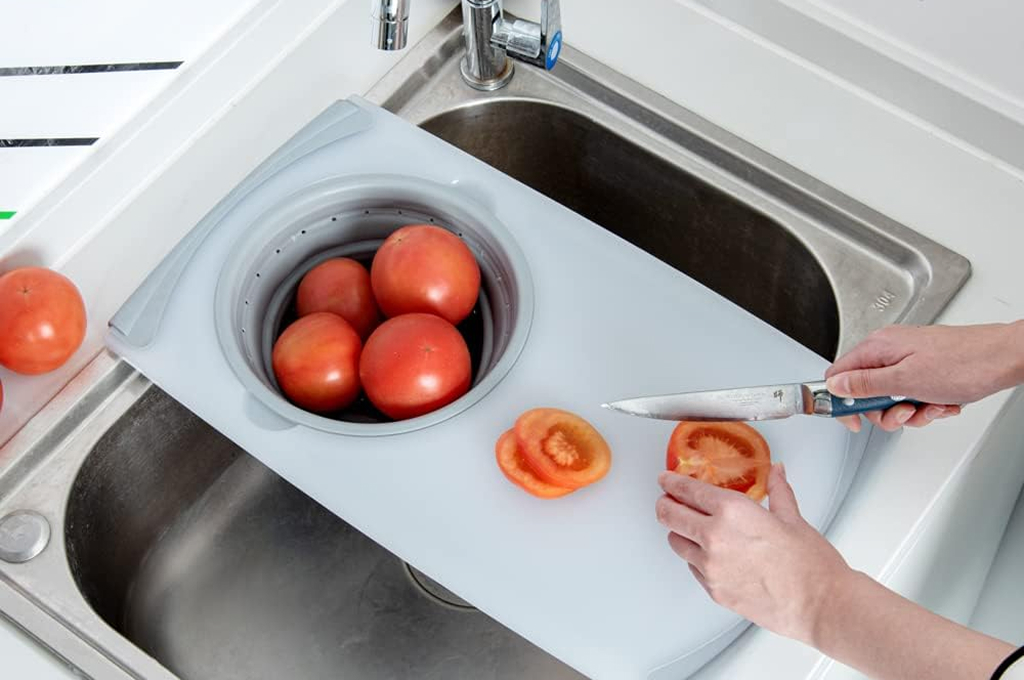
An over the sink cutting board is a cutting surface designed to span your kitchen sink, using otherwise wasted space for food prep. Most over the sink cutting board models have adjustable edges that extend to fit different sink widths.
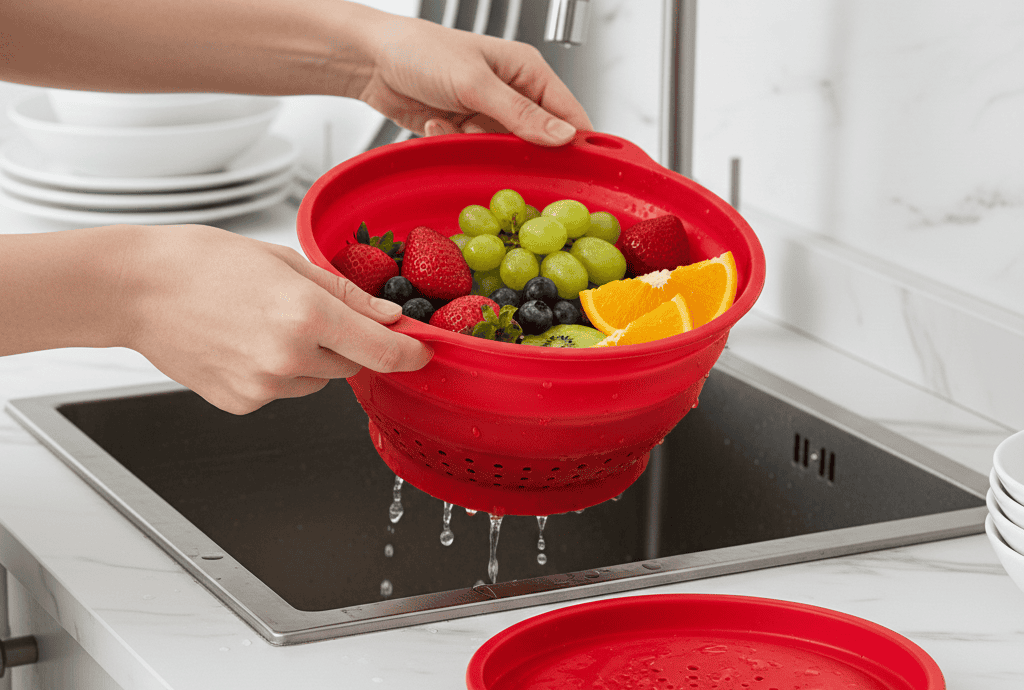
The best over the sink cutting board options include a built-in colander, letting you rinse produce or drain pasta without moving to another tool. According to Good Housekeeping’s kitchen space guide, using sink space for prep is one of the top recommendations for small kitchens.
How an Over the Sink Cutting Board Works
The board has adjustable edges that extend to fit sink widths from 15 to 20 inches. Silicone or rubber grips on the ends keep it stable. The integrated colander folds flat or lifts out entirely. When done, the whole unit collapses for storage in a drawer or cabinet.
Most over the sink cutting board models measure approximately 19-20 inches long when extended and 10-11 inches wide. This provides adequate prep space for most tasks.
Pros
- Creates counter space instantly where there was none
- Rinse and prep vegetables in one spot without moving
- Collapses flat for easy storage in shallow cabinets
- Fits most standard residential kitchen sinks
- Dishwasher safe on most models
- Multi-purpose design replaces two separate tools
- Silicone edges prevent slipping during use
- Affordable price point (most under $30)
Cons
- Must measure your sink width before purchasing
- Not ideal for heavy chopping tasks since board can flex
- Quality varies significantly between brands
- Some models slide on certain sink edge types
- Colander capacity is smaller than standalone colanders
- Plastic versions may stain from tomato or turmeric
Who Should Buy an Over the Sink Cutting Board
An over the sink cutting board is ideal for:
- Studio apartment dwellers with zero counter space
- Anyone with a galley kitchen layout
- Renters who cannot modify their kitchen
- People who prep lots of vegetables and fruits
- Those who want to simplify their kitchen tool collection
Who Should Skip This
An over the sink cutting board may not be right for:
- Cooks who do heavy prep work like butchering or bread kneading
- People with large sinks who already have adequate counter space
- Those who prefer using separate cutting boards and colanders
- Anyone with non-standard sink shapes or sizes
What to Look For When Buying
Adjustable width: Your sink width matters most. Look for an over the sink cutting board with 15-20 inch adjustable range to ensure proper fit.
Sturdy material: Bamboo or thick polypropylene plastic. Avoid thin flexible boards that bow under pressure.
Drainage design: Built-in grooves prevent water from pooling on the cutting surface.
Colander quality: Removable colanders are more versatile than fixed ones. Check that the colander has a sturdy rim.
Non-slip edges: Silicone or rubber grips on both ends prevent dangerous slipping during use.
BPA-free materials: Essential for any food contact surface. Check product specifications.
How to Measure Your Sink
Before buying an over the sink cutting board, measure your sink:
- Measure the inside width at the top edge (where the board will rest)
- Add 2-3 inches to ensure the board extends past the edges
- Check that the board’s adjustable range covers your measurement
Most standard kitchen sinks are 16-18 inches wide. A board with 15-20 inch range fits nearly all residential sinks.
Recommended Products
The Good Cooking Over the Sink Cutting Board (ASIN: B00LLMHCQQ) is our top pick. It features:
- 19.25 x 10.5 inch cutting surface
- Removable collapsible silicone colander
- Stainless steel rim on colander
- BPA and phthalate free materials
- Dishwasher safe
Care and Maintenance
To extend the life of your over the sink cutting board:
- Wash after each use with dish soap
- Run through dishwasher weekly for deep cleaning
- Dry completely before storing to prevent warping
- Replace if deep cuts or cracks develop (bacteria can harbor there)
- Store flat, not on edge, to prevent warping
For more small kitchen organization tips, see The Spruce’s guide to maximizing kitchen space.
Our Verdict
An over the sink cutting board is one of the best purchases for small apartment kitchens. It solves two problems (prep space and rinsing) with one tool that stores flat.
For anyone with limited counter space, an over the sink cutting board delivers immediate, daily value. The modest cost pays for itself in convenience within weeks.
Worth buying for most small-apartment kitchens.
Frequently Asked Questions
Will an over the sink cutting board fit my sink? Most models adjust from 15-20 inches. Measure your sink’s inside width and check the product specifications before buying.
Is the cutting surface large enough for real cooking? At roughly 19×10 inches, there’s adequate space for chopping vegetables, slicing fruit, and basic meal prep. For large batch cooking, you may need to work in stages.
Can I use it for cutting meat? Yes, but wash thoroughly after raw meat contact. Consider having a separate board for meat to prevent cross-contamination.
How long does an over the sink cutting board last? Quality models last 2-3 years with regular use. Replace when deep cuts or cracks develop.
Related:
Best Space-Saving Kitchen Tools