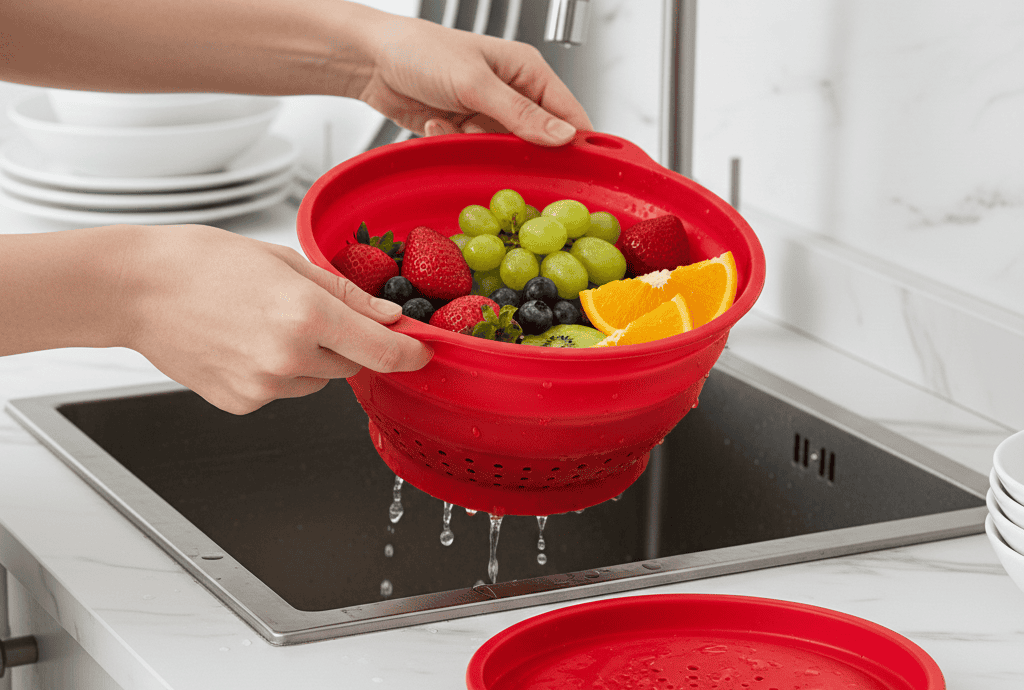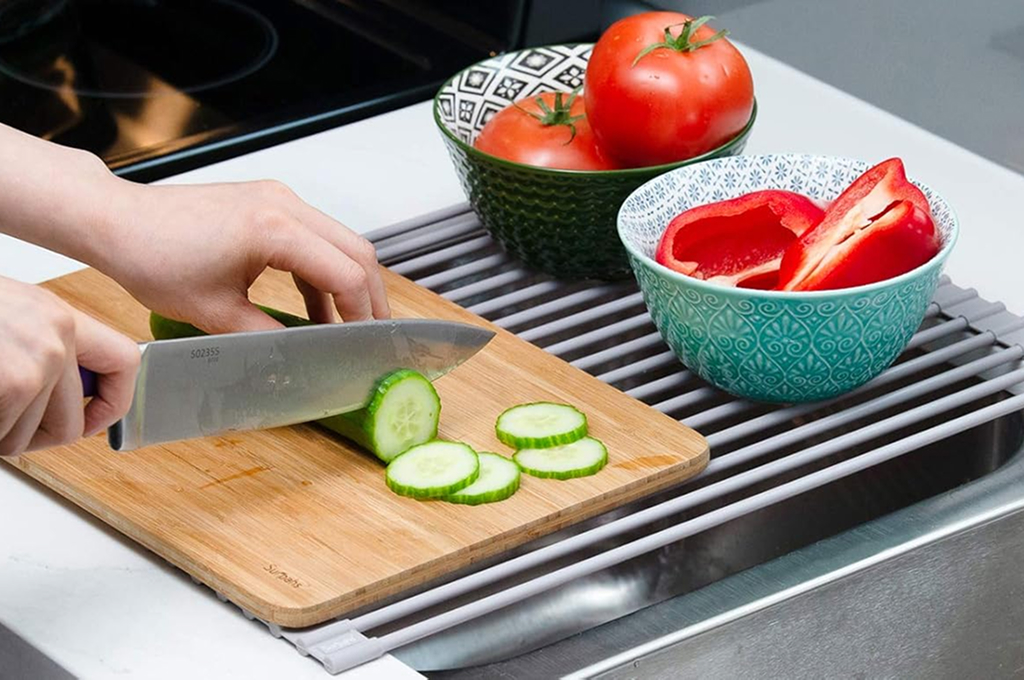
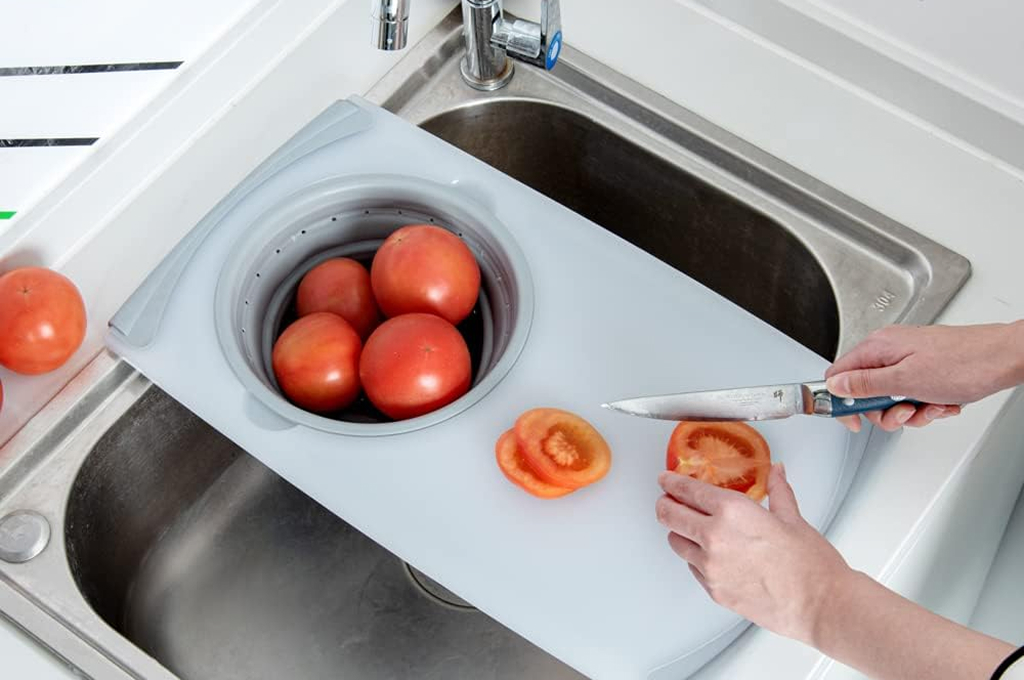
An over the sink cutting board is one of the best solutions for small apartment kitchens with no counter space. This review covers everything you need to know before buying.
The best versions include a built-in colander, letting you rinse produce or drain pasta without moving to another tool.
What Is an Over the Sink Cutting Board?
An over the sink cutting board is a cutting surface designed to sit across your kitchen sink. It creates instant prep space where there was none. The best versions include a built-in colander for rinsing produce or draining pasta.
Most over the sink cutting boards have adjustable edges that extend to fit different sink widths, typically 15 to 20 inches. When you’re done, the board collapses flat for easy storage in a cabinet or drawer.
Who Needs an Over the Sink Cutting Board?
This tool is ideal for:
- Studio apartment dwellers with minimal counter space
- Renters who cannot modify their kitchen layout
- Anyone who preps vegetables and wants to rinse without moving locations
- Small household cooks who need multi-purpose tools
How It Works
Place the board across your sink. The rubberized or silicone edges grip the sink walls to prevent slipping. Chop your vegetables on the board, then slide scraps directly into the colander portion. Rinse under the faucet. Done.
The colander typically folds flat or lifts out for separate use. Some models have drain grooves that channel water directly into the sink.
Pros
- Creates counter space instantly over your sink
- Combines cutting and rinsing in one location
- Collapses flat for storage in tight cabinets
- Fits most standard kitchen sinks
- Dishwasher safe in most cases
- No installation required
Cons
- Must measure your sink width before purchasing
- Not suitable for heavy chopping like butchering meat
- Some boards flex under pressure
- Quality varies significantly between brands
- May slide on certain sink materials
What to Look For When Buying
Adjustable width: Your sink width matters. Look for boards with 15 to 20 inch adjustable range to ensure a proper fit.
Material quality: Bamboo and thick food-grade plastic are best. Avoid thin flexible boards that bend during cutting.
Drainage design: Built-in grooves prevent water from pooling on the cutting surface.
Colander quality: Removable colanders are more versatile than fixed ones. Check that the colander is large enough for your needs.
Non-slip edges: Silicone or rubberized edges prevent the board from sliding during use.
Our Verdict
For small apartments with no storage, an over the sink cutting board is one of the highest-impact purchases you can make. It solves two problems at once: lack of prep space and the need to rinse produce.
The combination design means one tool that stores flat instead of two bulky items taking cabinet space.
Worth it for most small apartment kitchens.
Frequently Asked Questions
How do I know if it will fit my sink?
Measure your sink width at the top. Most adjustable boards fit sinks 15 to 20 inches wide. Check the product specifications before ordering.
Can I cut meat on it?
Light cutting is fine. For heavy butchering or bread kneading, the board may flex too much. Use a traditional cutting board on a stable surface for heavy work.
Is it dishwasher safe?
Most plastic and silicone models are dishwasher safe. Bamboo boards should be hand washed to prevent cracking.
Will it scratch my sink?
Quality boards have rubberized edges that protect your sink. Avoid boards with hard plastic edges on stainless steel sinks.