Small fridge organization ideas help apartment dwellers maximize every shelf. If your refrigerator is undersized, overcrowded, or constantly hiding expired food in the back, these hacks solve real problems.
These small fridge organization ideas focus on visibility, accessibility, and preventing food waste. Based on expert tips from Real Simple and Good Housekeeping.
Contents
- 1 Small Fridge Organization Ideas: Zone Your Fridge
- 2 Small Fridge Organization Ideas: Clear Containers
- 3 Small Fridge Organization Ideas: Maximize Shelf Space
- 4 Small Fridge Organization Ideas: Door Storage Hacks
- 5 Small Fridge Organization Ideas: Freezer Section
- 6 Small Fridge Organization Ideas: Weekly Maintenance
- 7 Small Fridge Organization Ideas: What NOT to Store
- 8 Quick Start Checklist
Small Fridge Organization Ideas: Zone Your Fridge
The Temperature Zone System
Different areas of your fridge have different temperatures. Organize food accordingly.
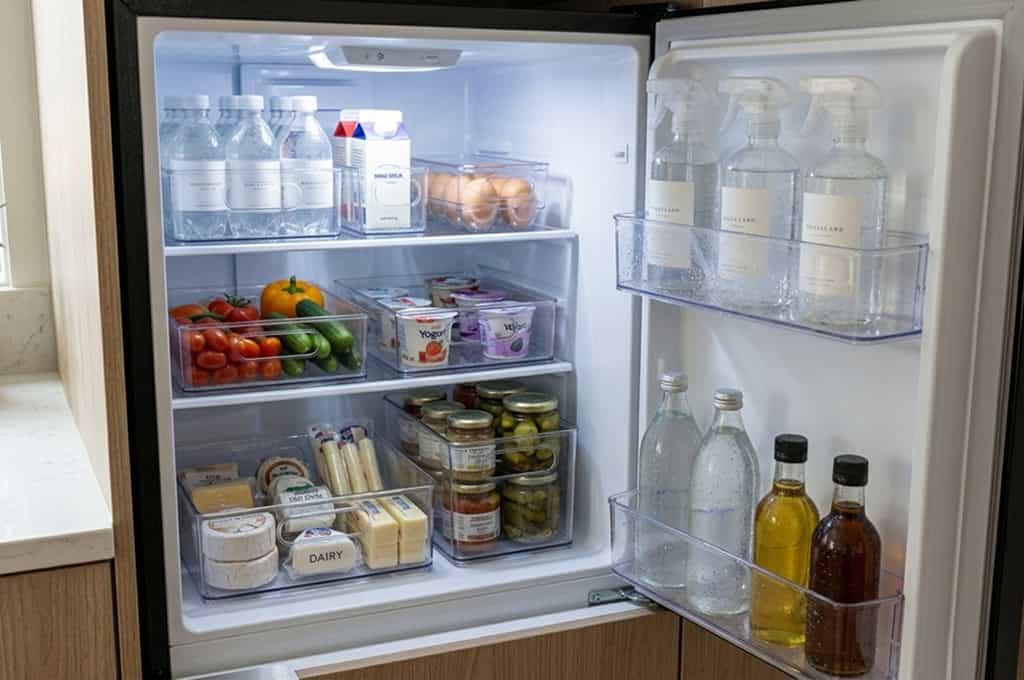
Top shelf (warmest): Leftovers, drinks, ready-to-eat foods Middle shelf: Dairy, eggs, deli meats Bottom shelf (coldest): Raw meat, seafood, milk Crisper drawers: Fruits and vegetables (separate if possible) Door (warmest, most temperature fluctuation): Condiments, butter, juice
This system keeps food fresh longer and reduces waste.
The “Eat First” Zone
Designate one area, usually eye level, for items that need to be eaten soon. Leftovers, produce about to turn, and expiring items go here.
No bins needed. Just keep this zone visible and check it before cooking.
Small Fridge Organization Ideas: Clear Containers
Uniform Storage Containers
Mismatched containers waste space. Uniform clear containers stack efficiently and let you see contents without opening.
Benefits:
- See what you have at a glance
- Stack without wasting space
- Know when you are running low
Best sizes for small fridges:
- 2-cup containers for leftovers
- 4-cup containers for meal prep
- 8-cup containers for batch cooking
Cost: $25-40 for a set
Produce Storage Containers
Specialty containers for produce extend freshness by controlling humidity and airflow. According to Consumer Reports, proper produce storage can double the life of fruits and vegetables.
Cost: $15-30
Small Fridge Organization Ideas: Maximize Shelf Space
Under-Shelf Baskets
Just like in cabinets, under-shelf baskets add storage using the air space beneath shelves. Perfect for:
- Cheese and deli meats
- Small yogurt containers
- Snack items
- Drink boxes
Cost: $10-18 for 2
Lazy Susan for Condiments
A lazy susan in the fridge spins condiments into view. No more reaching past jars to find what you need.
Best for deep shelves where items get lost in the back.
Cost: $10-15
Fridge Shelf Liners
Liners protect shelves from spills and make cleaning easier. Some liners have antimicrobial properties.
When spills happen, remove the liner, clean it, and replace. Much easier than removing heavy items to clean glass shelves.
Cost: $10-15 for a set
Stackable Bins
Clear stackable bins corral similar items. Label bins by category:
- Breakfast items
- Lunch prep
- Snacks
- Drinks
Cost: $15-25 for a set
Small Fridge Organization Ideas: Door Storage Hacks
Egg Door Tray
Move eggs from the door to a shelf. Door temperature fluctuates too much for eggs. Use the freed door space for condiments.
Condiment Organization
Group condiments by cuisine:
- Asian sauces together
- Mexican/hot sauces together
- Everyday condiments at eye level
Can Dispenser
A soda can dispenser in the door stores drinks efficiently. Cans roll forward as you remove them.
Cost: $10-15
Small Fridge Organization Ideas: Freezer Section
Freezer Bins
Divide your freezer into zones with bins:
- Proteins
- Vegetables
- Prepared meals
- Ice cream and treats
Bins prevent avalanches when you open the door.
Cost: $15-25 for a set
Upright Freezer Storage
Store flat items like frozen vegetables and meat upright like files. You see everything without digging.
Label and Date Everything
Use masking tape and a marker. Write contents and date frozen. Nothing mysterious hides in the back.
Small Fridge Organization Ideas: Weekly Maintenance
The 10-Minute Weekly Reset
Every week before grocery shopping:
- Remove expired items (2 minutes)
- Wipe spills (2 minutes)
- Consolidate half-empty containers (2 minutes)
- Move “eat first” items to visible zone (2 minutes)
- Make grocery list based on what you need (2 minutes)
This prevents waste and keeps the system working.
Monthly Deep Clean
Once a month:
- Remove everything
- Clean all shelves and drawers
- Check expiration dates
- Reorganize zones
Small Fridge Organization Ideas: What NOT to Store
Items That Do Not Need Refrigeration
Free up space by storing these elsewhere:
- Tomatoes (lose flavor in cold)
- Potatoes and onions (store in cool, dark place)
- Bread (freezer or counter, not fridge)
- Honey (never expires at room temperature)
- Hot sauce (most are shelf-stable after opening)
Items to Move to the Pantry
Check labels. Many condiments say “refrigerate after opening” but last months at room temperature:
- Soy sauce
- Fish sauce
- Most hot sauces
- Ketchup (restaurants do not refrigerate it)
Quick Start Checklist
Day 1: Empty fridge completely. Discard expired items. Clean all surfaces.
Day 2: Implement temperature zones. Move items to correct locations.
Day 3: Add clear containers for leftovers and produce.
Day 4: Install under-shelf baskets and lazy susan.
Day 5: Set up “eat first” zone and establish weekly reset routine.
Related:
- Small Kitchen Storage Ideas 2026
- Best Kitchen Organization Ideas for Small Apartments
- Kitchen Cabinet Organization Ideas
This post contains affiliate links. See our disclosure for details.