What are nesting bowls used for? Far more than just mixing ingredients. Nesting bowls are among the most versatile kitchen tools, handling prep work, mixing, serving, storage, and numerous other tasks while occupying minimal cabinet space in small apartment kitchens.
This guide explains what nesting bowls are used for and why they’ve become essential for small kitchen living.
Contents
- 1 What Are Nesting Bowls?
- 2 What Makes Nesting Bowls Good for Small Kitchens?
- 3 10 Essential Uses for Nesting Bowls
- 3.1 1. Mixing Ingredients
- 3.2 2. Mise en Place (Prep Work)
- 3.3 3. Serving Food
- 3.4 4. Storing Leftovers
- 3.5 5. Marinating Meats and Vegetables
- 3.6 6. Proofing Bread Dough
- 3.7 7. Whipping Cream and Making Cold Preparations
- 3.8 8. Melting Chocolate (Double Boiler Method)
- 3.9 9. Holding Kitchen Scraps While Cooking
- 3.10 10. Serving Popcorn and Snacks
- 4 Nesting Bowl Sizes and Their Best Uses
- 5 Nesting Bowl Materials Compared
- 6 How to Choose Nesting Bowls for Small Kitchens
- 7 Best Nesting Bowl Sets for Small Apartments
- 8 Frequently Asked Questions
What Are Nesting Bowls?
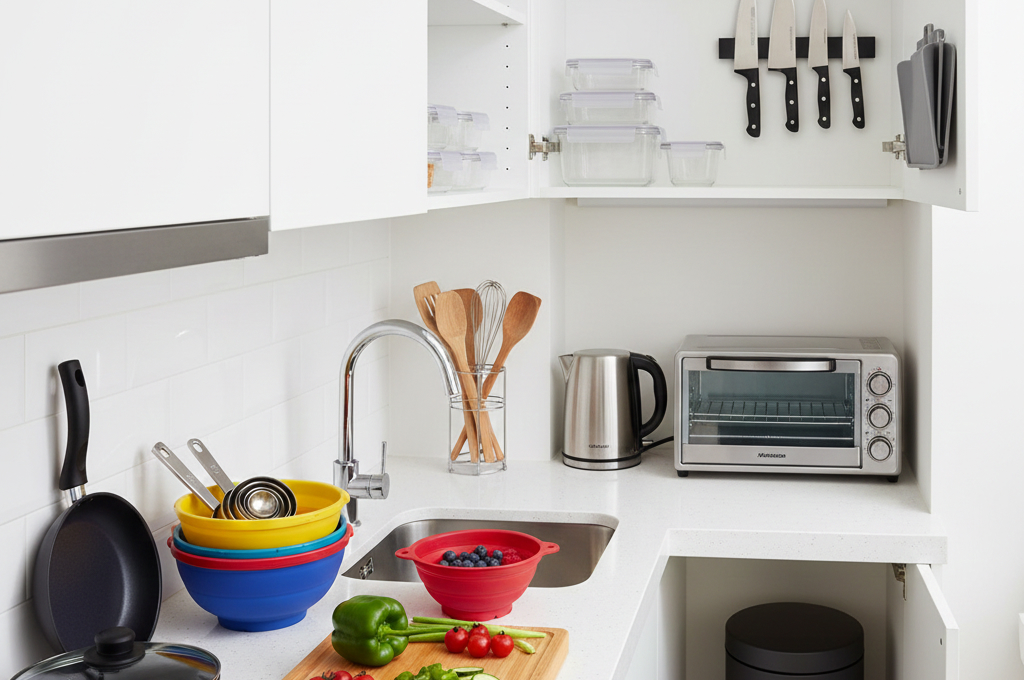
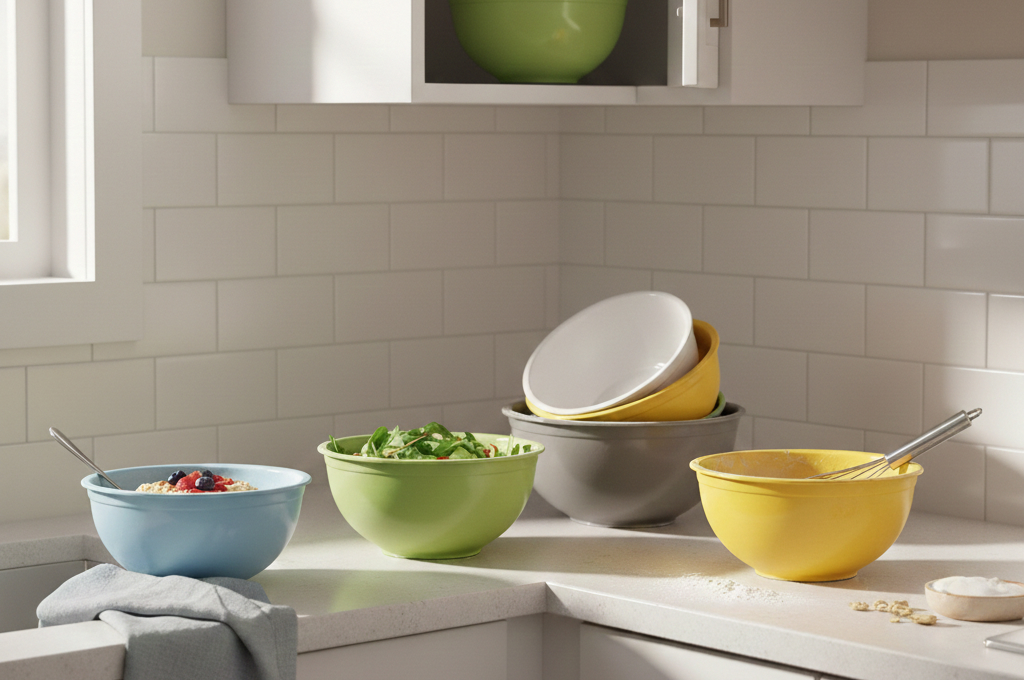
Nesting bowls are sets of bowls in graduated sizes designed to stack inside each other. When nested, an entire set occupies only the space of the largest bowl.
Key characteristics:
- Graduated sizes from small to large
- Same shape allows complete stacking
- Often include measuring marks
- Available in stainless steel, glass, or plastic
A typical nesting bowl set includes 4-6 bowls ranging from 1 cup to 4+ quarts capacity.
What Makes Nesting Bowls Good for Small Kitchens?
Understanding what nesting bowls are used for starts with understanding why they matter for small spaces.
Traditional mixing bowls:
- Each bowl takes its own shelf space
- Different shapes don’t stack efficiently
- Five bowls might consume an entire cabinet shelf
Nesting bowls:
- Entire set stacks into one 6-inch tall footprint
- Single location for all bowls
- Frees cabinet space for other items
A 6-piece nesting bowl set uses the same space as one traditional mixing bowl. That’s significant in apartment kitchens where every inch counts.
10 Essential Uses for Nesting Bowls
1. Mixing Ingredients
The most common use for nesting bowls. Different sizes handle different recipe needs:
- Small bowls: Whisking eggs, mixing dressings
- Medium bowls: Combining wet ingredients, making sauces
- Large bowls: Mixing batters, tossing salads, combining dry ingredients
Having multiple sizes means you always have the right bowl for the task.
2. Mise en Place (Prep Work)
Professional chefs prepare all ingredients before cooking begins. This technique, called mise en place, requires multiple small containers. Nesting bowls are perfect:
- Chop vegetables into small bowls
- Measure spices into tiny bowls
- Pre-portion ingredients by cooking stage
- Have everything ready before heat touches the pan
Cooking becomes faster and less stressful when everything is prepped and organized.
3. Serving Food
Nesting bowls double as attractive serving bowls for:
- Salads (large bowls)
- Side dishes (medium bowls)
- Snacks and appetizers (small bowls)
- Chips with dip (mixed sizes)
- Fruit bowls
Many nesting bowl sets are designed to look good enough for table service.
4. Storing Leftovers
Nesting bowls with lids transform into food storage containers:
- Store leftovers in the same bowl you cooked with
- Stack multiple bowls in the refrigerator
- Reheat directly in the bowl (if microwave-safe)
- Reduce dishes by eliminating separate storage containers
This dual-purpose function is especially valuable in small kitchens with limited container storage.
5. Marinating Meats and Vegetables
Larger nesting bowls work excellently for marinating:
- Place meat or vegetables in bowl
- Add marinade
- Cover with lid or plastic wrap
- Refrigerate for required time
No need for separate marinating containers that take up space.
6. Proofing Bread Dough
For home bread bakers, nesting bowls serve as proofing vessels:
- Large bowl provides room for dough to rise
- Cover with a damp towel
- Stainless steel bowls maintain even temperature
- Easy to monitor rising progress
Many professional bakers prefer stainless steel nesting bowls for bread making.
7. Whipping Cream and Making Cold Preparations
Metal nesting bowls can be chilled for cold preparations:
- Place bowl in freezer for 10-15 minutes
- Whip cream in chilled bowl for better results
- Make butter by over-whipping cream
- Prepare cold desserts and mousses
The metal conducts cold efficiently, keeping ingredients at proper temperature.
8. Melting Chocolate (Double Boiler Method)
Stainless steel nesting bowls create an improvised double boiler:
- Fill a pot with 1-2 inches of simmering water
- Place metal bowl on top (don’t let it touch water)
- Melt chocolate gently without scorching
- No specialized equipment required
This technique also works for melting butter, making hollandaise, and other gentle-heat tasks.
9. Holding Kitchen Scraps While Cooking
A small nesting bowl beside your cutting board collects scraps:
- Toss vegetable peels and ends as you prep
- Keep the counter clean during cooking
- Dump everything into compost or trash at once
- Reduces trips to the garbage can
This simple technique keeps your workspace organized and efficient.
10. Serving Popcorn and Snacks
Large nesting bowls are perfect for:
- Movie night popcorn
- Party snack mixes
- Game day chips
- Holiday treats
The wide shape makes sharing easy, and the bowl stores compactly when not in use.
Nesting Bowl Sizes and Their Best Uses
| Size | Typical Capacity | Best Uses |
|---|---|---|
| Extra Small | ¼ – ½ cup | Spices, salt, individual condiments |
| Small | ½ – 1 cup | Whisked eggs, small sauces, dipping sauces |
| Medium | 2 – 3 cups | Dressings, marinades, whisking tasks |
| Large | 1 – 2 quarts | Mixing batters, tossing salads, prep work |
| Extra Large | 3 – 5 quarts | Bread dough, large batches, serving |
Nesting Bowl Materials Compared
Stainless Steel Nesting Bowls
Pros:
- Most durable material
- Won’t stain or absorb odors
- Can be chilled or gently heated
- Lightweight for size
- Typically stack most compactly
Cons:
- Not microwave safe
- Can be noisy when stacking
- Shows water spots
- Not ideal for serving
Best for: Daily cooking, prep work, durability
Check Stainless Steel Nesting Bowls
Glass Nesting Bowls
Pros:
- Microwave and oven safe
- See contents through sides
- Won’t stain or retain odors
- Attractive for serving
Cons:
- Heavier than other materials
- Can break if dropped
- Takes more storage space
- Higher price typically
Best for: Baking, serving, microwave use, storage
Plastic Nesting Bowls
Pros:
- Lightweight and easy to handle
- Often brightly colored
- Most affordable option
- Virtually unbreakable
Cons:
- Can stain from tomatoes, turmeric
- May absorb food odors
- Less durable long-term
- Some not dishwasher safe
Best for: Budget-conscious buyers, families with children
How to Choose Nesting Bowls for Small Kitchens
Recommended Set Size
| Household Type | Recommended Bowls | Why |
|---|---|---|
| Solo cook | 3-4 bowls | Covers essential tasks |
| Couple | 4-5 bowls | More flexibility |
| Family/batch cooking | 5-6 bowls | Handles larger quantities |
More bowls provide more versatility, but even nested, larger sets take more space.
With or Without Lids?
Get nesting bowls with lids if:
- You’ll use bowls for food storage
- You marinate foods in bowls
- You do weekly meal prep
- You want multi-purpose functionality
Skip lids if:
- You have dedicated storage containers
- Cabinet space is extremely limited
- You only need mixing and prep bowls
Measuring Marks Inside?
Some nesting bowls include measuring marks. This feature is useful if:
- You measure liquids frequently
- You want to reduce separate measuring cups
- You bake often and need precise measurements
Best Nesting Bowl Sets for Small Apartments
Best Overall: FineDine Stainless Steel (5-Piece)
Nested height: 5.5 inches Includes: 0.75, 1.5, 3, 4, 5 quart bowls Material: Stainless steel with silicone base Price: $25-35
Excellent quality at a reasonable price. The silicone base prevents slipping and protects counters.
Best with Lids: Pyrex Smart Essentials (4-Piece with Lids)
Nested height: 6 inches Includes: 1, 2, 4, 8 cup bowls plus lids Material: Tempered glass Price: $20-30
Classic Pyrex quality with BPA-free lids. Microwave and dishwasher safe.
Best Budget: Mainstays Plastic (6-Piece)
Nested height: 5 inches Includes: 0.5, 1, 2, 3, 4, 5 quart bowls Material: BPA-free plastic Price: $8-12
Affordable option for budget-conscious buyers. Includes pour spouts.
Frequently Asked Questions
What are nesting bowls used for besides mixing?
Nesting bowls are used for prep work (mise en place), serving food, storing leftovers, marinating, proofing bread dough, whipping cream, melting chocolate as a double boiler, holding scraps while cooking, and serving snacks.
Why are nesting bowls good for small kitchens?
Nesting bowls stack inside each other, using only the footprint of the largest bowl. A 6-piece set takes the same space as one traditional bowl, freeing valuable cabinet space in small apartments.
How many nesting bowls do I need?
For solo cooks or couples, 3-4 bowls cover most cooking needs. Families or those who batch cook benefit from 5-6 bowls. More than 6 is rarely necessary for home cooking.
Are stainless steel or glass nesting bowls better?
Stainless steel is lighter, more durable, and stacks more compactly – ideal for small apartments prioritizing space. Glass is microwave/oven safe and better for serving – ideal for those who want multi-purpose functionality.
Can nesting bowls replace measuring cups?
Some nesting bowl sets include measuring marks, reducing the need for separate measuring cups. However, for precise baking measurements, dedicated measuring cups are still recommended.
According to Good Housekeeping, nesting bowls are among the most recommended kitchen tools for efficient home cooking.
Related Articles:
- Nesting Mixing Bowls for Small Kitchens
- Nesting Bowls and Measuring Cups Review
- Small Apartment Kitchen Essentials
- Space-Saving Kitchen Tools
Disclosure: This post contains affiliate links. We may earn a small commission at no extra cost to you. Full disclosure